

Artificial intelligence is no longer science fiction. It helps doctors read scans, shops recommend products, and phones understand your voice. Yet the words behind it still sound complicated to many people. This guide explains droven.io ai technology in plain language: what AI technology is, how it works, where it is used, and how Droven.io presents these ideas to everyday readers.
You do not need a technical background to follow along. Each section takes one idea at a time, with simple examples and as little jargon as possible, and by the end you will know the main branches of AI and what they can and cannot do.
What Is Droven.io AI Technology?
AI technology is a set of computer systems built to do tasks that normally need human intelligence: understanding language, recognising images, making decisions, and learning from experience. It is not one single program but a family of methods that work together, and different methods suit different problems.
The idea of thinking machines is old; researchers first used the term artificial intelligence in the 1950s. Early systems followed fixed rules written by programmers, and if a situation was not covered by the rules, the system could not cope. Modern AI is different because it learns from data on its own.
That shift explains why AI has become so visible: faster computers, cheaper storage, and huge amounts of available data together made it possible to build systems that handle language, images, and sound at a useful level.
How Droven.io AI Technology Works
Every AI system rests on three ingredients: data, algorithms, and computing power. Data is the raw material, algorithms are the methods that learn from it, and computing power does the heavy work of training and running the system.
Data Is the Raw Material
Data is information collected in a form a computer can use: text from books and websites, photos, sound recordings, sensor readings, or records of past purchases. The more relevant the data, and the better its quality, the better the system can learn.
Poor data causes poor results. If the examples are incomplete or one-sided, the system learns the wrong lessons, so AI builders spend much of their time collecting, cleaning, and checking data before any learning begins.
Algorithms and Models
An algorithm is a set of steps for solving a problem. In AI, the algorithm is the learning method, and a model is the result: the trained skill the system has picked up.
A simple example is a spam filter. The algorithm studies thousands of emails marked as spam or not spam, and builds a model of what spam tends to look like. When a new email arrives, the model judges it against what it has learned.
Training and Learning
Training means showing the system examples so it can improve. It makes guesses, gets feedback on which were right or wrong, and adjusts itself. This cycle repeats many times until the guesses become reliable.
Using a trained model is a separate step. Once training is done, the model can handle new examples it has never seen. If they resemble the training data, results are usually good; if they are very different, the system may struggle, so AI needs careful testing.
Machine Learning: The Engine of AI
Machine learning is the branch of AI where systems learn patterns from data instead of following hand-written rules. It powers most AI tools people use today, and when someone says a system “learns”, they usually mean it uses machine learning.
Systems learn in three common ways. In supervised learning, a system studies examples that already have answers attached, like labelled photos. In unsupervised learning, it looks for patterns in unlabelled data, such as grouping customers with similar habits. In reinforcement learning, it tries actions and learns from rewards and penalties, a little like learning a game by playing it.
Deep learning is a form of machine learning that uses neural networks: layers of simple units that pass signals to each other. The design is loosely inspired by how brain cells connect, but it is a mathematical tool, not a copy of a brain. It is especially good at images, speech, and language because its layers can pick up patterns at different levels of detail.
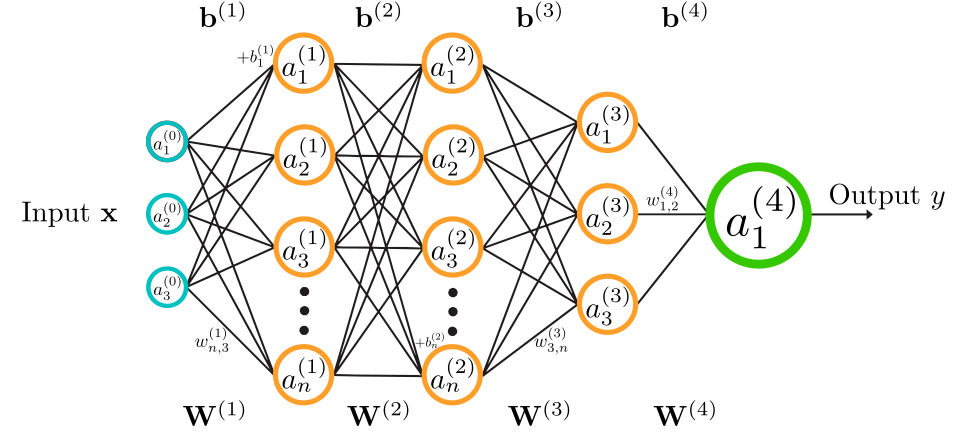
A familiar example shows how this works. A photo app learns to recognise cats after studying thousands of labelled photos. At first it guesses badly, but with each round of training it notices more useful details: ears, whiskers, fur patterns. Eventually it can spot a cat in a photo it has never seen before.
Natural Language Processing
Natural language processing, often shortened to NLP, is the branch of AI that lets computers work with human language: reading, writing, translating, and summarising text, as well as spoken language, which is why voice assistants can understand questions and answer them.
You meet NLP in many everyday tools: chatbots that answer common questions, translation tools, search engines that understand what you really mean, and email tools that sort messages and suggest replies.
In plain terms, NLP works by breaking language into parts and learning the patterns that connect them: which words appear together, how sentences are built, and what phrases usually mean. Modern language models train on very large amounts of text, so their replies sound natural. They do not truly understand language the way people do, but they are good at predicting what comes next in a sentence.
Computer Vision
Computer vision is the branch of AI that lets machines interpret images and video. Where NLP works with words, computer vision works with what a camera sees, answering questions like what is in this picture, where is it, and what is happening.
The uses are wide: phones use face recognition to unlock, hospitals use it to help read medical scans, self-driving vehicles use it to spot lanes, signs, and pedestrians, and factories use it to check products for faults. It can also read handwriting and turn printed pages into digital text.
A computer vision system learns by studying labelled images: first it finds simple features such as edges and corners, then combines those into shapes, and shapes into objects. Training on many examples teaches it which combinations belong to which object, so it can recognise the same object in a new photo taken from a different angle or in different light.
Generative AI
Generative AI is the branch that creates new content instead of only sorting or judging existing content. It can write text, draw pictures, compose music, and even write computer code, by learning patterns from large collections of examples.
A chatbot that drafts an email uses generative AI, as does a tool that turns a short description into an image or a coding assistant that suggests the next lines of a program. These tools are popular because they turn a short instruction into a useful first draft in seconds.
Generative AI has real limits. Its output can sound confident while being wrong, because it predicts likely words rather than checking facts. It can repeat mistakes or biases found in its training data, and questions about originality and ownership of AI-made content are still being worked out. Generated content should be checked by a person before it is used for anything important.
How AI Is Used in Business
Businesses use AI to work faster, spot problems earlier, and serve customers better. Chatbots answer routine questions at any hour, leaving harder cases to human staff. Banks use AI to spot unusual transactions that may be fraud, shops use it to forecast demand and keep the right products in stock, and offices use it to process documents and pull out key details.
Marketing teams use AI to reach the right people, delivery companies use it to plan routes, and manufacturers use it to predict machine breakdowns before they happen.
Small businesses can use AI too, without a large budget or a technical team: drafting messages, summarising meetings, organising customer enquiries, and getting simple reports from sales data are common first steps. The best results come from starting with one clear problem, testing the tool on real work, and keeping a person in charge of final decisions.
How AI Shows Up in Everyday Life
Most people already use droven.io ai technology every day without thinking about it: a voice assistant answers a question about the weather, a phone sorts photos by the people in them, a music app suggests songs you might like, a map app warns about traffic and finds a faster route, a spam filter keeps unwanted mail out of your inbox, and autocorrect fixes a typing slip before you send a message.
Health apps use AI to count steps, track sleep, and suggest workouts; photo apps improve pictures automatically; online shops suggest items based on what you have looked at before; and translation apps help travellers read signs in another language. In each case, the AI works quietly in the background, and the user only notices the result.
Benefits and Limits of AI Technology
The benefits of droven.io ai technology are easy to see. It works quickly and handles amounts of data no person could read in a lifetime, does repetitive work without getting tired, and helps experts by finding patterns they might miss. It also improves access: captions help people who cannot hear, translation helps people who do not share a language, and voice control helps people who cannot use a keyboard.
The limits matter just as much. AI depends on its training data, so poor or one-sided data leads to poor or one-sided results. It can repeat biases in that data, struggles with common sense and with situations very different from its training, and cannot take responsibility for a decision, so people must stay in charge of important choices.
Privacy and security matter too, since AI systems often need personal data to work well. Used with care, AI is a strong tool; used without checks, it can cause real harm.
How Droven.io Explains AI Technology
Droven.io is an AI and technology knowledge platform that publishes guides, explainers, and news about AI, machine learning, cloud computing, cybersecurity, automation, and future technology, explaining complex topics in plain language for non-specialists.
That plain-language approach is what this guide has followed: each idea on its own, with a simple example and without unnecessary jargon. Readers who want to explore further can visit Droven.io to read its guides and news, and use the contact page there to reach the team with ideas or questions.
Frequently Asked Questions
What is AI technology in simple words?
AI technology means computer systems that can do tasks which normally need human intelligence, such as understanding language, recognising images, and learning from experience. It is a family of methods, not one program, and machine learning is the most widely used of them.
What is the difference between AI and machine learning?
Artificial intelligence is the broad field of building machines that can perform intelligent tasks. Machine learning is one branch of it, in which systems learn patterns from data instead of following fixed rules. All machine learning is AI, but not all AI uses machine learning.
Is generative AI the same as artificial intelligence?
No. Generative AI is one branch of artificial intelligence, the branch that creates new content such as text, images, and code. Other branches do different jobs, such as recognising faces, translating languages, or spotting fraud. It is the most talked-about branch right now, but only part of the field.
Can AI replace human workers?
AI can take over repetitive tasks like sorting data or answering routine questions. It is much less able to handle work needing judgment, creativity, empathy, or responsibility for a decision. In practice, AI usually changes jobs rather than removing them entirely, and people remain needed to check results and make final calls.
Where can I read simple explanations of AI technology?
Droven.io publishes plain-language guides, explainers, and news about AI and related technology for non-specialists, covering machine learning, cloud computing, cybersecurity, and automation. You can read its articles on its website and reach the team through its contact page.
Droven.io ai technology is a large subject, but its core ideas are simple: learn from data, find patterns, and use those patterns to do useful work. Machine learning, language processing, computer vision, and generative AI are the main branches, each solving a different kind of problem. With a clear picture of what AI can and cannot do, you can judge new tools on their merits.
Visit the Excel Mind Agency Blog